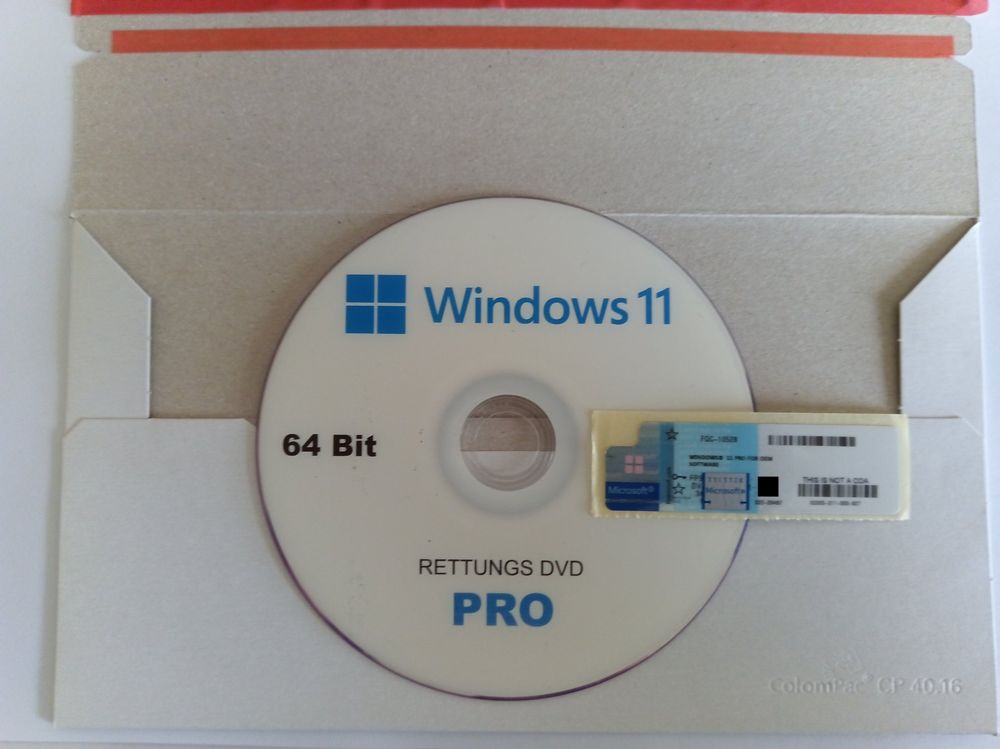
Windows Security Vs. Third-Party Programs: Norton, Kaspersky And Defender? Designing An Cohesive Digital Defense Strategy
It’s not just a matter of comparing antivirus engines. This is a crucial decision regarding your digital environment that spans from your operating system to productivity software. This choice is deeply interconnected with other crucial decisions, such as whether you bought a legitimate Windows 11 lizenz or a suspect grey-market key, and if you’re running a standalone office lizenz` or a modern subscription. The best security approach creates harmony across your software estate The wrong choice creates major gaps and conflicts. This guide will help you understand the Ten most crucial, but often ignored aspects that connect your security choice directly to the licensing strategy and the way you manage your system.
1. Defender’s Deep OS Integration – Your first firewall will be the one that validates your licensing
Windows Security (Defender) is not a standalone product; it is a core integral component of a legitimate Windows 11 installation. Its effectiveness and reliability is directly tied to the validity of your “windows license”. If you have activated Windows with an unofficial `windows 11 home keypurchased from a grey-market `windows 11 buy website You cannot rely on Defender’s update mechanism nor its threat intelligence feeds in full. Microsoft is able to remove or disable service on unauthentic software. Therefore, your very first security choice is to ensure that the validity of your OS license is genuine and is digitally linked to your hardware.
2. Windows 7 Mindset Is a Critical Vulnerability
Windows 7 users upgrading to Windows 8 are under the dangerous assumption that third-party antivirus software is necessary. When it was the Windows 7 days, this was absolutely true. Windows 11 Defender is today an cloud-backed, top-of-the-line security software. If you’re accustomed to installing Norton 360 or similar to it on Windows 11 computers, resource conflicts can occur, as they compete for lower levels of system control. Modernity demands that you assess the performance of Defender prior to proceeding. It may be enough to avoid subscription costs and system overhead so long as you have a valid Windows license, and all updates, are up-to the minute and genuine.
3. OEM System Nuances as well as Bloatware Conflicts.
New PCs are often equipped with trialware, particularly those with pre-installed Windows 11 OEM licenses. This causes an immediate conflict. Prior to activating a new security program, you must uninstall the previous security program completely. If you are installing a brand new OEM system, these trial versions must be removed completely before you evaluate whether to install a preferred security suite, like “kaspersky premium” or continue using Defender. The inability to eliminate these trials can cause system instability, performance loss and even partial disabling of both options.
4. Kaspersky Premium with the Architecture of Control.
Kaspersky premium is the most expensive of security suites offered by third parties. It gives you granular control on security of the system, privacy, and monitoring of networks. Its true value comes out when you have complex installations. A security console that is unified (often separate from Kaspersky’s consumer products) such as, for instance, is essential if you are running an organization that is using”windows Server 2025″ to store files or perform backups. Kaspersky’s technical controls work with Windows 11 Pro. Local policies can be modified to improve security performance and reduce interruptions.
5. Norton 360: Beyond Antivirus as an Ecosystem.
Norton 360 has evolved from a security program to become a complete digital ecosystem. Its benefits include the integration of VPN as well as monitoring the dark web for personal data and cloud back up. It’s an excellent choice for people who are a bit disorganized in their software strategy, for example, those who have an office lizenz purchase that is standalone (perpetual), but no Microsoft 365 subscription. Norton can help to fill any gap (backups and privacy) left by Microsoft’s integrated ecosystem (OneDrive Defender Edge protections).
6. The interplay between Office Licensing And Macro Security.
Your productivity program is an essential attack tool. Defender as well as third-party suites provide deep integration to scan macros and documents regardless of whether you’re having a perpetual office license (office lizenz) or the monthly subscription. Third-party software suites offer greater control over Office applications, macro behavior, and other features. If your workflow is dependent on complex Office documents from other sources, a program like Kaspersky Premium may offer more transparent and manageable controls specifically for this threat type as opposed to Defender’s opaque, automated approach.
7. Business Security Divide: CALs against Centralized Management.
The security conversation is completely different for any system that runs Windows 2025 or needs Cals. Windows 11 Pro with Defender can be centrally managed via Microsoft Defender for Endpoint and Intune. Third-party applications require separate management consoles and licensing. The decision is no longer based on which software has the better detection engine instead, it’s about which one integrates seamlessly with your existing IT management system. A security system that is not coordinated could result in a higher administrative cost for businesses than the minimal rate of detection.
8. Resource Consumption vs. System Licensing Tier.
An untruth is that Defender is “lighter” than other third-party suites. In actuality the most modern and well installed suite such as Norton 360 or Kaspersky Premium can be highly optimised. Performance is typically determined by the Windows license or system integrity. Security tools won’t work on a system that is damaged. This includes a system with an outdated OS key and drivers as well as software that conflicts. Windows 11 Professional or Home lizenz, in conjunction with a stable, clean system, is the best base for Defender as well as third-party security suites.
9. The Update Dependency One Point of Failure
All security software can only be as effective as its last update. Defender’s updates are directly connected to Windows Update. If your Windows installation is damaged or your license is not valid, this chain can fail. Third-party suites maintain their own update channels. This is a huge advantage for a system which might be unstable. It also adds a new background process. You can choose one depending on the degree of confidence you have with your Windows installation.
10. The process of developing a Coherent Defence-in-Depth Strategy.
The main objective of a defense isn’t to pick a “winner,” it’s to create a seamless layering that doesn’t have unnecessary overlap. Windows Defender is the core of a complete defense for a Windows 11 Retail user who also has a Microsoft 365 subscription to Office, Edge, and OneDrive. Addition of a complete suite of software from a third-party is often redundant. Someone who is using a variety of software, such as Windows 11, Google Chrome and standalone Office might prefer the broad, browser-independent security and digital privacy features offered by a suite, like Norton 360. It is crucial that your security choice logically extends from the broader software ecosystem and licensing, creating an integrated shield, not multiple conflicting or redundant security measures. Take a look at the recommended windows 11 home key for site recommendations including office2019 download, microsoft office with key, outlook software download, ms office 2016, ms project, microsoft office key, visio download, windows office, office key, microsoft project and more.

Understanding Windows Server 2025 Client Access Licenses (Cals) And Windows Server 2025 For Business.
Implementing the “windows Server 2025” for a company that is growing is a major leap in performance, since it transitions from a peer-to-peer network to a controlled, centralized IT infrastructure. The most costly and widespread misconception isn’t the server software, but rather the necessity for Client Access Licences (or cals). They’re the legal and technical foundation to the Microsoft server ecosystem. Failure to properly license access for clients could derail the progress of an IT project, result in serious compliance penalties in an audit, and lead to a chain of dependencies that impact everything from your operating system for your desktop choices to productivity and security software. This guide explains the ten most important interconnected concepts that every business must be aware of in order to prepare for Windows Server in 2025. It also shows how the software that licenses servers affects the structure of your desktop and also how it affects legality.
1. The Server License is just the entry fee.
When you purchase a `windows server 2025″ license, you’re purchasing the right to install and run the server software on a physical or virtual machine. Importantly, this license does not grant any user or device the ability to connect to it. The right to connect is bought separately through CALs. Consider it as leasing the stage and the venue for the performance. Then you’ll need a ticket (a ticket) for each individual (User CAL) or gadget (Device CAL) who will be allowed to see the show, regardless of whether they’re actually listening or watching from the back.
2. CALs & Desktop OS: A pair that cannot be separated.
You are not allowed to legally utilize a Client Access License (CAL) to provide access to clients running an illegal operating systems. If your company workstations are activated with grey-market `windows 11 oem` keys from a windows11 Lizenz kaufen discount site buying legitimate CALs for these keys is a contradictory and useless action. Microsoft’s licensing terms demand that the operating system used by the client to be licensed properly. An audit will first invalidate the desktop licenses, making the CALs–and potentially the server access itself–non-compliant. It is necessary to be able to clean your stack from the desktop to the server.
3. The Choice Between Users CAL and Device CAL modeling Workforce.
This is an important decision that has significant financial consequences. A User License permits users to use any number of devices, including their laptop, desktop and tablet to connect to the server. A Device CAL permits access to a particular device (e.g. workstations that are shared on factory floors) for any number of users. The most cost-effective option will be based on your use patterns. Smarter User CALs are available for mobile workers with several devices. Device CALs will cost less in situations where shift workers use a limited amount of dedicated terminals. Model your actual use. You can mix types however this can make management more difficult.
4. Windows 11 is not compatible with Windows 10 Home.
Windows 11 Home machines cannot join traditional Active Directory Domains, which is a fundamental feature of Windows Server. Even if technical workarounds were employed, they would be in direct violation of the licensing. Client devices that have to utilize services, such as printing queues, file sharing and others, have to authenticate. Windows 11 Pro Enterprise and Education editions will be required for the Windows server in 2025. If future server deployments are even possible, purchasing an “windows 11 Home Key” for a machine that is a business one is a waste of money.
5. The Security Management Nexus. Server, the CALs, Endpoint Security.
A Windows Server environment properly configured with CALs, enables for centralized deployment of security policy through Group Policy. It can reduce the cost and hassle of maintaining the standalone security program. Instead of manually configuring “kaspersky premium” or “norton360” on 50 different computers Policies can pull uniform settings to the server. By using the server as a management platform, you will be able to increase the value of your security for your endpoint more efficient and efficient. The CAL is the license that allows this managed connection.
6. Office License Synergy for a Server Environment
Your users will most likely be able to access documents shared by your windows 2025 server. Microsoft 365 will impact your choice between a perpetual Office 2021 license or the office lizenz. Microsoft 365 Business Premium/Enterprise includes Azure AD (which can sync to your Active Directory) and Intune Device Management. The hybrid identity model simplifies access to cloud and on-premise resources. The subscription offers an easy integration process in comparison to standalone perpetual licenses.
7. Alternative License for Public Access using “External Connector”.
Cals are available only to access internal devices and users. If you wish to grant an external user access to your server (e.g. anonymous FTP or web users) you can’t use CALs. Instead, you need to buy the Windows Server External Connector (EC) license. This is a flat-fee licensing that is connected to the server which allows for unlimited and access to external users that are anonymous. Understanding this distinction prevents the risk of committing a huge compliance lapse when deploying public-facing services.
8. The CALs are version-specific, but upwardly compatible.
You purchase Cals (e.g. Windows Server 2020 CALs) for a certain server version. These CALs are legally valid for accessing servers that run that version or any previous version. A 2025-CAL gives access to any server that is operating a version prior to 2025. However, they will not work for future versions. If you choose to upgrade to Windows Server 2029, you’ll require a new CAL. It is important to factor this into your long-term IT budget.
9. Virtualization and CALs The “Every Access” Rule.
In virtualized environments, the CAL requirement remains, but it’s based on access to the virtual machine (VM) itself. If you have 50 users who will be using the filesharing service in the Windows 2025 virtualized version, you will require 50 User Cals. (Or you may need sufficient Device CALs to ensure that they are able to access the device). Your CAL requirement isn’t affected by the number VMs that you run; it is determined by the number of users or devices are accessing these VMs. This helps avoid over-spending for complicated virtual setups.
10. The total cost of ownership (TCO) reality: beyond the sticker price.
The business case for `windows server 2025` must include the complete licensing stack, which includes the server’s license and the CALs required for all users/devices, and the required upgrade of all client PCs to Windows 11 Pro (if not already). When compared to cloud-based alternatives (like the transfer of files to SharePoint within Microsoft 365 and using Azure AD) the initial capital cost (CapEx) for licenses as well as the operational costs of running the physical server, needs to be determined. Cloud services are often cheaper for smaller and mid-sized enterprises than server hardware, licensing for windows Server 2025, cals, or the Windows 11 Pro upgrade for all fleets. It is not just a technical decision, but also an aesthetic one. See the most popular windows server 2025 for more examples including windows server os, windows server 2016 server, microsoft office 2019, windows server 2019, microsoft project, office 365 key, microsoft visio, microsoft office 2019, ms visio software, outlook software download and more.