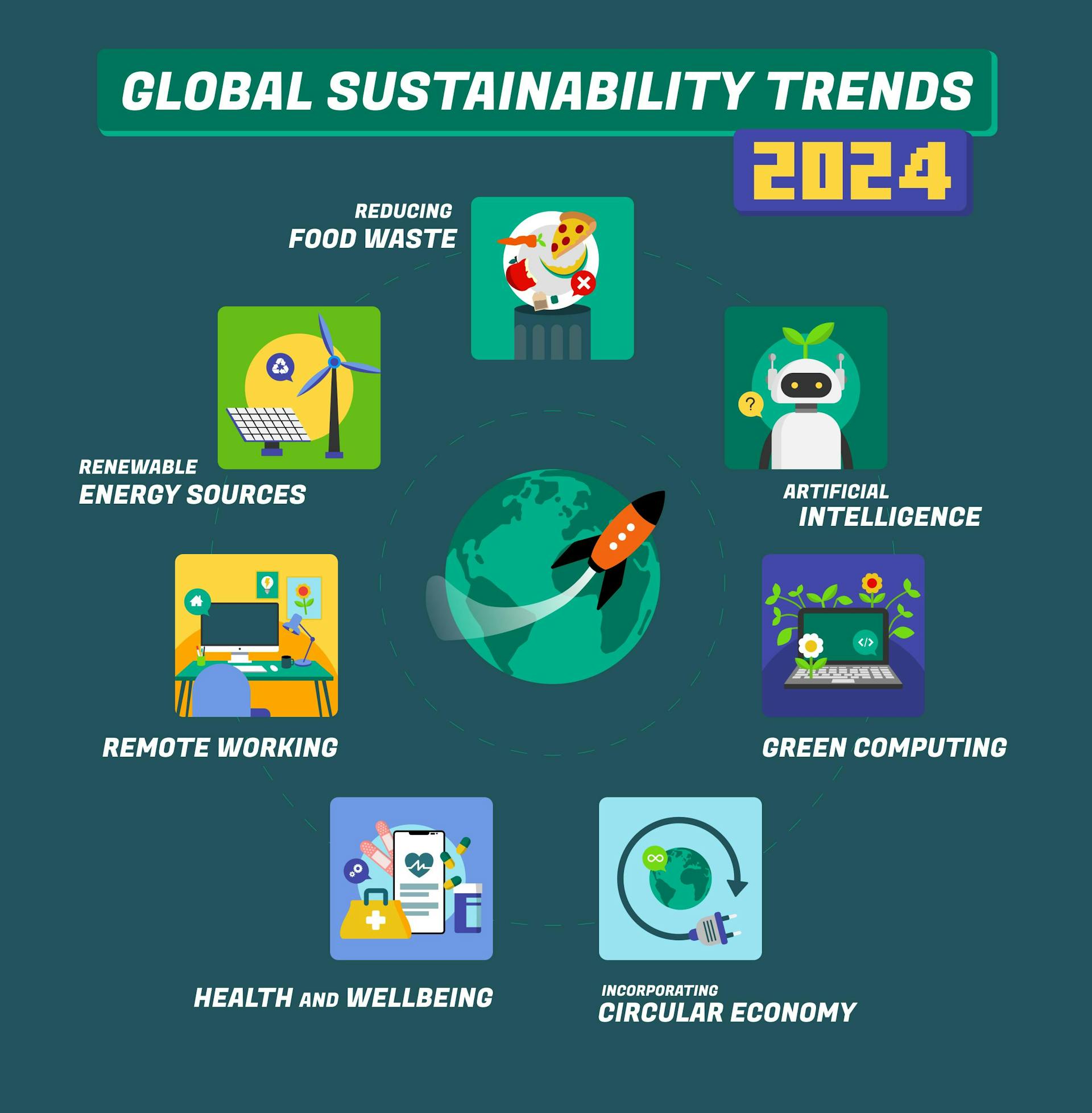
Top 10 Climate & Sustainability Trends That Will Be A Hot Topic In 2026/27.
Climate and sustainability are moving from the margins of public debate to the centre of corporate strategy, economic planning and daily decision-making. Scientific research has been evident for decades, but the application of this science into policy, investment, and behaviour change is now taking place at a rapid pace and scale that been unimaginable just only a few years ago. Changes are uneven, debated in some circles and not nearly fast enough for most experts. However, the trend of progress is shifting with a speed that is becoming difficult to ignore. Here are the top 10 climate and sustainability trends making headlines in 2026/27.
1. Energy Transition Accelerates Beyond Expectations Energy Transition Accelerates Beyond Expectations
Renewable energy investment continues outpace even the most optimistic estimates. New capacity additions for wind and solar set records each year. costs have fallen to levels that make clean energy a more affordable option in many markets, with no subsidy, and investment in grid infrastructure and storage is ramping up to keep pace with. However, the transition is not free of complex. The dependence on fossil fuels is present in many countries, and the rate of change drastically varies between regions. But the economics of clean energy has become strong that the pace is almost self-sustaining in the markets in charge of the transition.
2. Carbon Markets Are Mature and Facing Greater Scrutiny
Voluntary carbon markets have passed traversing a turbulent period in which high-profile inquiries have revealed that lots of widely traded carbon credit have delivered less benefit to climate than was claimed. This has led to a push for higher standards that are more transparent, as well as more thorough verification. Compliance carbon markets linked to regulatory frameworks are increasing in both size and geographic reach as well as the pressure on voluntary markets to prove genuine additionality and permanence is reshaping the definition of what a credible carbon offset like. The concept behind it is still important but the criteria required for a credible participation are increasing.
3. Climate Adaptation Receives Long-Overdue Investment
Over the years, climate policies was mostly focused on reduction of emissions in order to limit future warming. The reality that significant warming is occurring has driven adaptation, as well as building resilience to the ramifications that are inexplicably occurring, onto the agenda. Coast flood defences, heat-resistant urban architecture, drought-resistant crops, advanced warning and alert systems for the most extreme weather conditions are all getting money that suggests a clearer appraisal of what the coming years will bring. In the past, adaptation was seen as abandoning mitigation, but as an essential enhancement to it.
4. Corporate Sustainability Reporting becomes mandatory
The days of voluntary self-reported, largely undocumented corporate sustainability commitments is coming towards a conclusion in many areas. It is now mandatory to disclose sustainability information for emissions, climate risk exposure, and impacts of supply chains are gaining traction across major economies. This is causing organizations to move from aspirational net-zero pledges to documented, auditable plans with clear interim targets. This transition is challenging for many companies, but the shift to standardised, comparable sustainability information is considered a necessary action to ensure that companies are holding their commitments to climate change accountable.
5. The Food System Comes Under Greater Pressure To Change
The land and agricultural sector account an important portion of greenhouse gas emissions in the world, and the food system that includes processing, production, packaging as well as waste, has an impact on the climate that is often difficult to comprehend. The way consumers consume food is changing slowly to plant-based food options, as they become commonplace and food waste reduction getting more traction at both the commercial and household levels. Additionally, the pressure on policy makers on agricultural emissions along with deforestation related to production of food and utilization of the land to sequester carbon is building in ways that will reshape the economics of how food can be produced and how.
6. Biodiversity Loss Gains Traction Alongside Climate
For the majority of the past decade, biodiversity loss has sat in the shadow of the climate crisis in both public and policy circles despite it being an equally grave global crisis. The situation is shifting. New international standards, reports from corporations obligations and increasing communication concerning the interplay between ecosystem collapse and human well-being have raised the profile of biodiversity considerably. The concept of nature-positive business working in ways that restore, rather than harm natural ecosystems, is shifting from niche to a growing standard in the same way net zero was just a few years ago.
7. Green Hydrogen Moves From Promise to Pilot
Green hydrogen, produced using renewable electricity to split water, has been identified as a major solution to decarbonizing sectors in which direct electrification is difficult, such as heavy industry, shipping and long-haul flights. There has always been a problem with cost and the size. The 2026/27 timeframe is when a significant many large-scale hydrogen production projects moving from feasibility studies to production. Prices are dropping because electrolyser technology is maturing, and governments are backing this sector with significant investments. If green hydrogen scales in time enough to meet requirements placed on it is a mystery, but progress is accelerating.
8. Climate Litigation Intensifies As A Tool to Ensure Accountability
Legal actions have emerged as one of the more potent mechanisms for holding governments and corporations to their commitments to climate change. The cases brought by citizens, cities, and environmental associations are resulting in landmark rulings across different countries. The courts are becoming increasingly willing to declare that major emitters and governments are bound by law in connection with protecting the climate. The amount of climate-related legal cases is growing rapidly over the past five years, and continues to grow. For both government and corporate ministers, the legal risk related to inadequate climate action is now a major concern rather than a theoretical one.
9. It is the Circular Economy Moves Into The Mainstream
This linear process of taking as, make and dispose is under constant pressure from regulation, consumer expectation, and the economic merits of ensuring that materials are used for longer. Extended producer responsibility legislation is increasing, making manufacturers accountable to the effects of their products at the end of life their products. Repair as well as reuse markets are expanding across different categories including clothing, electronics, and furniture. Many major companies are investing heavily in the creation of products and supply chains built around circularity and not treating it as a secondary concern. “Circular Economy” has no longer been a fringe idea, but a growing element of how sustainable business is defined.
10. Climate anxiety influences public attitudes and Behaviour
The psychological ramifications of the climate crisis is getting a lot of attention. Climate anxiety, a persistent fear of environmental collapse, is especially popular among younger generations who were raised with the issue as a fundamental aspect of their world. This has shaped consumer behavior, career choices, mental health habits, and political participation in ways that are beginning to be seen at a larger scale. How societies support people in dealing with the effects of climate change and how to channel the anxiety into constructive intervention rather than despair or despair is emerging as the real issue facing public health and education as well as politicians alike.
The challenge of climate change and ecological collapse is immense, and there’s plenty of grounds for reservations about whether the current efforts are adequate. What these trends show that is an increasingly global society that is dealing with the issue more deeply at a higher level, with more concrete solutions, and more rapidly than at any previous point. The gap between what is happening and what’s needed remains wide, but it is expanding in a number in areas, beginning get smaller. To find more context, check out the most trusted To find additional info, head to some of the most trusted civicviewpoint.net/ for further context.
The Top 10 Online Retail Changes Changing The Way We Shop In 2026
Online shopping has become embedded in daily life that it is difficult to remember how long ago it was seen as something of a novelty or reserved for specific product categories. It is now not only a channel, but a fundamental component of the way retail operates, how brands are built, and what consumers’ expectations are built. The market continues to develop rapidly, driven by the advancement of technology, shifting consumer behaviour which is intensifying competition, as well as the continuous pressure placed on every member of the ecosystem to prove their worth in a more efficient marketplace. Here are ten online shopping trends reshaping how we shop online in the coming 2026/27.
1. AI Personalisation transforms the Shopping Experience
Artificial intelligence’s application to e-commerce personalisation has advanced well beyond basic recommendation engines offering products based on past purchases. AI systems are creating dynamic, real-time models of the individual’s shopping preferences that are able to adapt to the context, time of day devices, browsing patterns and data from the whole digital footprint. The result is an experience of shopping that feels truly tailored and not generically specific. For retail stores, the commercial impact of personalised shopping with sophisticated technology on conversion rates and average order values and customer retention is huge enough to warrant AI investment in this area has become a requirement for business as opposed to a distinguishing factor.
2. Social Commerce Becomes A Primary Discovery Channel
The integration of shopping capabilities directly into the social networks has evolved into a major channel for commerce in its own right. Consumers are finding, evaluating and buying items from their social feeds through recommendations from creators shopping content, shoppable content, as well as live events for commerce that combine entertainment with purchase. The model, which was pioneered on an huge scale in China and is now established on all Western markets. Its significance for brands is that social media is not merely a brand marketing exercise but rather a sales channel that requires the same quality of business as every other element of the retail operations.
3. Ultra-Fast Delivery Rakes the Bar For Logistics
Customers’ expectations about delivery times will continue to increase. Delivery on the same day is becoming more common in urban areas and the need to narrow the gap between order and delivery is driving significant investment into fulfilment infrastructure, small-scale warehouses located closer to demand centres autonomous delivery vehicles drone delivery systems which are advancing from test into operationalization in an increasing number of cities. For smaller retailers, achieving these expectations independently is increasingly difficult, resulting in consolidation among fulfilment networks as well as third-party logistics providers capable of the infrastructure required. The environmental consequences of rapid deliveries are coming under more scrutiny alongside the commercial competition.
4. Recommerce and The Circular Economy Shape Retail
The market for secondhand, refurbished and second-hand items is growing faster than retail across a variety of product categories. Consumers’ demand for lower prices and lower environmental impacts and the appeal goods that are no longer available fresh is driving the development in peer-to-peer sites for resales operating recommerce platforms for brands, and specialists in the field of fashion, electronic, furniture, and sporting items. Large brands investment in resales and refurbishment programs to capture value from second-hand markets and to sustain relationships with customers shopping secondhand instead of buying new. A stigma previously attached to buying used items across various kinds of categories has disappeared completely among young people.
5. Augmented Reality Reducing The Uncertainty of online shopping
One of the persistent limitations of online shopping compared to physical retail is the inability of properly evaluating the quality of a product prior to buying. Augmented realities are addressing this in a specific category with sufficient maturity to have an impact on purchasing behaviors and returns in a significant manner. Testing out eyewear, clothes and cosmetics or putting furniture and equipment in a real-life space using a smartphone camera, and viewing products at the right dimensions in the context of purchase can all be done by moving from impressive demos to standard features on major platforms and brands’ websites. The categories where fit dimensions, and the appearance in context have the biggest effects on the conversion rate and sales.
6. Subscription Commerce transcends Convenience
Subscription models in e-commerce has matured beyond the straightforward convenience notion of regular replenishment consumables. The most successful subscription offerings that will be available in 2026/27 rely on curation, community, and ongoing value which justifies regular payments instead of the locks-in techniques that were common in earlier models. The consumers have become more knowledgeable about the value of subscriptions and cancellation rates penalize services that rely on inertia rather than genuine ongoing benefit. Retailers, the advantages for subscriptions such as higher values over time, predictable revenue and stronger customer relationships are appealing when the underlying value proposition is sufficient to win real loyalty.
7. The cross-border nature of E-Commerce is growing and becoming more complex
The capability to purchase through retailers from anywhere in world has brought enormous potential for markets, as well as operational challenges relating to customs tax, returns, localisation as well as consumer protection compliance. E-commerce that is transborder has been growing in popularity in both retail and consumer markets as both extend their reach beyond domestic markets, but the complexity of regulations is growing along with the number of countries implementing digital service taxes and product safety rules, and consumer rights frameworks that are applicable to international sellers. Successful retailers in cross-border market share are those who have made a serious investment in localisation, compliance infrastructure and logistics capabilities that real international retail requires.
8. Voice And Conversational Commerce Find Their Use The Case
Voice-based buying, long believed as a transformative channel that had a history of delivering on that prediction and is now finding more authentic traction in specific and well-defined uses. Reordering consumables purchased regularly such as shopping lists, or checking order status are all activities where the use of voice offers an unmatched convenience over screen-based alternatives. Artificially-powered chat assistants, operated via chat interfaces and not than voice, are proving more flexible in helping shoppers make complex purchasing decisions by comparing options, and receive personalized recommendations via a dialogue format that works better for shopping with thought in comparison to conventional search and browse.
9. Sustainability Claims Are More Scrutinized And Regulation
Consumers’ interest in the eco-friendly and ethical repercussions of online shopping is high but is there a skepticism regarding the green claims that brands make. The regulation on greenwashing is becoming more stringent across all major markets, with demands for evidence-based claims, clear labelling, and transparency on supply chain practices that render vague sustainability claims legally and legally risky. Retailers that have invested in genuine environmental enhancements to their supply chains and operations are noticing that demonstrable and verified sustainability credentials are becoming an important competitive differentiation for the growing group of customers who are ready be a part of their declared environment-friendly choices when reliable information can be found to support their choices.
10. Payment Innovation Continues To Reduce Friction
The checkout procedure, which was historically among the top sources of abandoned baskets in the world of e-commerce is improving with the help of new payment technologies that cut down on friction at the last and most crucial point of the buying process. Buy now pay later is maturing and faces greater scrutiny from regulators about price and transparency. Digital wallets are becoming the standard payment method to pay for increasing amounts online transaction. It is replacing passwords and card details entry in many contexts. One-click purchases, embedded payments in apps and social platforms and the continual expansion in open banking-based payment methods are all creating a checkout experience that is faster, more secure, which means that you are less likely lose the customer at the last minute.
The online marketplace of 2026/27 will become more sophisticated, competitive, and more impactful for the retail industry as a whole than at any time in the past. These trends suggest a direction of travel that rewards retailers who are investing in customer experience, operational excellence and genuine value creation in comparison to those that rely on category monopolies, information asymmetries or lock-in mechanisms that consumers are increasingly adept at being able to recognize and avoid. The landscape of online shopping continues to evolve rapidly and the distance between the present and where it’ll be in another five years is likely to surprise just like the distance traveled. For more info, check out the leading sunlineinsight.com/ to learn more.